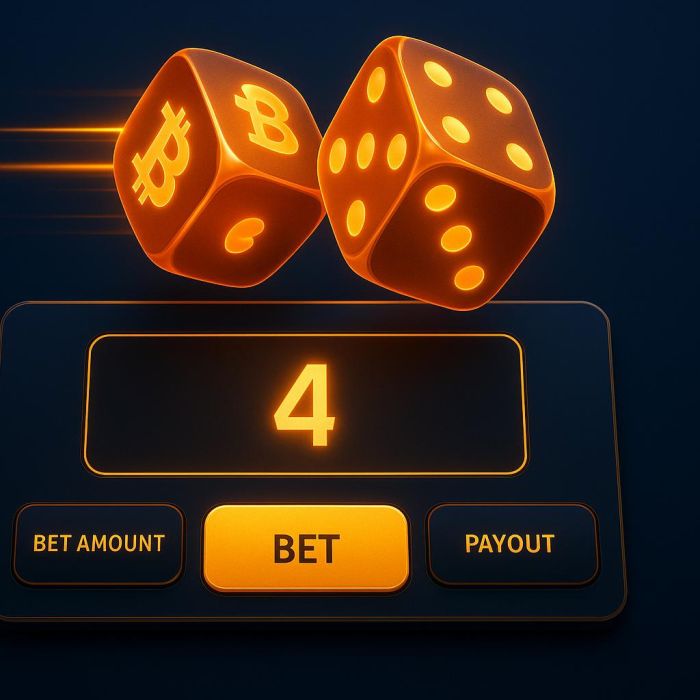

Crypto dice represents one of the oldest and most popular forms of blockchain gambling, combining simple gameplay with provably fair technology that traditional casinos can’t match. Unlike conventional online casinos where you must trust the house, crypto dice games let you verify every single roll using cryptographic proof.
This guide will teach you everything about crypto dice games—from basic rules and strategies to choosing the best platforms and understanding provably fair mechanics. I’ve spent hundreds of hours testing various Bitcoin dice platforms, analyzing their fairness algorithms, and experimenting with different betting approaches.
By the end, you’ll understand how to play crypto dice confidently, verify game fairness, and implement betting strategies that maximize your winning potential while managing risk. Whether you’re completely new to blockchain gambling or looking to refine your approach, this guide covers the essential knowledge you need to get started safely.
What Are Crypto Dice Games?
Crypto dice games are the simplest form of blockchain gambling at crypto casinos, where players predict whether a randomly generated number will be above or below a chosen threshold. The game uses cryptocurrency for betting and blockchain technology to ensure transparent, verifiable results that neither player nor casino can manipulate.
The Basics of Bitcoin Dice Gameplay
At its core, crypto dice works by generating a random number between 0 and 100. Before each roll, you choose whether the result will be higher or lower than a specific number you select. If you’re right, you win based on the probability multiplier.
For example, if you predict the roll will be over 50, you have roughly a 50% chance of winning. If you predict over 90, your win chance drops to about 10%, but your payout multiplier increases significantly. The entire process takes just seconds from bet to payout.
Unlike traditional dice games that use physical dice with six sides, crypto dice operates on a 0-100 scale. This provides much more flexibility in choosing your risk level. You can adjust your win probability anywhere from 1% to 98%, with payouts automatically calculated based on your selection.
Traditional casino dice games require you to trust the house. With Bitcoin dice, every roll can be independently verified through cryptographic hashes before and after the bet.
Why Crypto Dice Games Are So Popular
The simplicity of crypto dice makes it accessible to everyone. You don’t need to learn complex rules like in poker or develop strategies like in blackjack. Place your bet, make your prediction, and get instant results.
Speed is another major factor. Each round completes in under a second. I’ve personally completed over 100 rolls in just a few minutes when testing platforms. This fast-paced action appeals to players who want quick gambling sessions without lengthy game rounds.
The house edge in crypto dice typically ranges from just 1-2%, significantly lower than most traditional casino games. This means more of your money stays in play longer, giving you better long-term value compared to slots or roulette.
Instant cryptocurrency withdrawals set crypto dice apart from traditional online gambling. When I win on a Bitcoin dice platform, I can withdraw my funds to my wallet within minutes. No waiting days for bank transfers or payment processor approvals.
How Provably Fair Technology Works in Dice Games
Provably fair technology represents the biggest innovation in online gambling. Before each roll, the platform generates a server seed and converts it to a hash. You provide a client seed. These two seeds combine with a nonce (a number that increases with each bet) to generate your result.
The crucial part is that the server seed hash is shown to you before you bet. After the roll, the platform reveals the actual server seed. You can then verify that the revealed seed matches the original hash, proving the casino couldn’t change the result after seeing your bet.
This cryptographic verification means the casino cannot cheat. The result was predetermined before your bet, but neither you nor the casino could know what it would be. I verify my rolls randomly when testing platforms, and legitimate sites always pass verification.
Most crypto dice platforms include built-in verification tools. You simply click a button after your roll to see the seeds and confirm the fairness. Third-party verification sites also exist where you can independently check any roll using the seed data.
How to Play Crypto Dice: Step-by-Step Guide
Getting started with crypto dice takes just a few minutes once you understand the basic controls. The interface might look complicated at first, but each element serves a simple purpose. Let me walk you through the exact process I follow when placing bets.
Setting Up Your First Dice Bet
First, you’ll need to deposit cryptocurrency into your account. Most platforms support Bitcoin dice games, and many also accept Ethereum, Litecoin, Dogecoin, and other popular cryptocurrencies. I typically start with Bitcoin because it has the fastest processing times on most sites I’ve tested.
Once funded, locate the bet amount field. Start with the minimum bet while learning—usually around 0.00000001 BTC or similar small amounts. You can always increase your stake once comfortable with how the game works.
Next, you’ll see the prediction slider or number input. This controls your win probability and payout multiplier. Moving the slider left increases your win chance but decreases your payout. Moving it right does the opposite. Most platforms default to a 50% win chance when you start.
Finally, select whether you’re betting on “roll over” or “roll under” your chosen number. If you set 50 and choose “roll over,” you win if the result is 50.01 or higher. This seems simple, but I’ve seen beginners accidentally bet the wrong direction and lose unnecessarily.
Understanding Payout Multipliers and Win Chances
The relationship between probability and payout multipliers follows a simple formula. Your potential multiplier equals 100 divided by your win chance, minus the house edge. If you have a 50% win chance with a 1% house edge, your multiplier is approximately 1.98x.
This creates interesting risk-reward scenarios. With a 90% win chance, you win often but only get about 1.10x your bet. With a 10% win chance, you win rarely but receive approximately 9.90x payouts. Neither approach is inherently better—it depends on your goals and risk tolerance.
The house edge affects every bet equally in percentage terms, but it feels different depending on your strategy. When I bet at 90% win probability, I expect to win 9 out of 10 rolls. The house edge means I might actually win 89 out of 100 over time instead of the expected 90.
I always recommend checking the payout multiplier before clicking roll. During testing, I’ve noticed that some platforms display your total return (including your original bet) while others show only profit. Understanding this difference prevents confusion about your actual winnings.
Executing Your Roll and Verifying Results
Once everything is set, click the roll button. The result appears instantly—usually within a fraction of a second. The winning number displays clearly, along with whether you won or lost. Your balance updates automatically.
Most platforms show your recent betting history below the main game area. This lets you track your results and spot patterns in your wins and losses. I regularly review this history to monitor my overall performance during sessions.
After any roll, you can access the provably fair verification. Look for a verification button or icon next to your roll result. Clicking it reveals the server seed, client seed, and nonce used for that specific roll. The platform typically provides a hash calculator right there to verify everything matches.
I recommend verifying at least a few rolls during your first session on any new platform. This confirms the site is operating honestly. Once verified, you can trust the system, though spot-checking periodically doesn’t hurt.
Crypto Dice Strategies That Actually Work
While crypto dice is primarily a game of chance, different betting approaches can help you manage risk and potentially extend your playing time. I’ve tested numerous strategies over months of play, and these three represent the most practical options for different player types.
The Martingale Strategy for Dice Games
The Martingale system is the most famous betting strategy in gambling. You start with a base bet, and every time you lose, you double your next bet. When you eventually win, you recover all previous losses plus your original bet amount as profit.
For crypto dice, I set this up with high win probability—usually 85-90%. This gives me frequent wins to reset the doubling sequence. The key is having enough bankroll to survive a losing streak. With a 90% win chance, you’ll still occasionally hit 5-10 losses in a row.
Your bankroll should support at least 10 doubles of your base bet to use Martingale safely. If you start with 0.00000010 BTC, you need at least 0.00010240 BTC total. This math is crucial because without sufficient funds, a bad streak will bust your account before you can recover.
The biggest limitation is that Martingale doesn’t change the house edge. You’re still losing the same percentage long-term. What it does is convert many small wins and occasional large losses into a more steady experience—until that devastating losing streak hits. I stop after 8 consecutive losses regardless of my remaining balance.
Low-Risk Conservative Betting Approach
My conservative approach uses 85-90% win probability with fixed bet sizes. This isn’t exciting, but it maximizes your playing time and minimizes volatility. I set my bet to 1% of my total bankroll and rarely adjust it during a session.
With this strategy, you win most rolls but receive small multipliers—typically 1.10x to 1.15x. The goal isn’t making huge profits quickly. Instead, you’re aiming for steady, modest growth while experiencing the game. During my testing, this approach let me play for hours on a small initial deposit.
This strategy works best for beginners learning the platform or anyone who wants entertainment without significant risk. You’ll see your balance fluctuate, but dramatic swings are rare. I’ve had sessions where I played 500 rolls and ended within 5% of my starting balance.
Realistic expectations matter here. Even with 90% win probability and disciplined betting, the house edge means you’ll slowly lose over time. Think of this as paying a small fee for entertainment rather than trying to profit. Set a session budget and stop when you’ve had your fun.
High-Risk Chase Strategies
High-risk strategies involve setting very low win probabilities—usually 5-10%—and chasing large multipliers of 10x to 20x. This approach appeals to players who prefer infrequent big wins over steady small profits. I only use this strategy with money I’m completely comfortable losing.
The variance in high-risk betting is extreme. You’ll lose 10, 20, even 50 rolls in a row before hitting a win. When that win comes, it recovers many previous losses at once. The psychological challenge is handling those long losing streaks without panicking or increasing bet sizes improperly.
Stop-loss limits are absolutely critical with this approach. Before starting, I decide exactly how much I’m willing to lose—typically 20-30% of my session bankroll. Once I hit that limit, I stop regardless of how close I feel to a winning roll. This discipline has saved me from complete account wipes multiple times.
I cannot recommend high-risk strategies for new players or anyone with limited bankroll. The emotional roller coaster and potential for rapid losses make this suitable only for experienced gamblers who understand variance. Bankroll management becomes more important than the actual betting strategy itself.
One variation I’ve found less brutal is the “hunt and pivot” approach. I make 20-30 high-risk bets at 5% probability. If I hit a win, great. If not, I pivot to conservative betting to preserve remaining funds. This limits my exposure to devastating losing streaks while still giving me a chance at big multipliers.
Choosing the Best Crypto Dice Platform in 2025
Not all crypto dice platforms are created equal. After testing dozens of sites over the past year, I’ve identified several key factors that separate excellent platforms from mediocre or potentially problematic ones. Your choice of platform affects everything from game fairness to withdrawal speed.
Key Features to Look For
Provably fair certification is non-negotiable. Any legitimate crypto dice platform in 2025 should offer complete transparency through provably fair technology. Before depositing, I always verify that the site explains its fairness system and provides verification tools. If a platform can’t clearly demonstrate provably fair mechanics, I skip it entirely.
Cryptocurrency support matters depending on your preferences. Most platforms accept Bitcoin, but if you prefer using Ethereum, Litecoin, or newer coins, confirm support before registering. I prefer platforms offering multiple cryptocurrency options because it provides flexibility if network fees spike on one particular blockchain.
User interface quality directly impacts your experience. During testing, I’ve encountered platforms with confusing layouts that made it difficult to adjust bet settings or verify results. The best sites have clean, intuitive interfaces where everything is clearly labeled and accessible within one or two clicks.
Mobile compatibility has become essential. I test every platform on both desktop and mobile devices. Some sites offer dedicated apps, while others have responsive web designs. Either works fine as long as the mobile experience isn’t cramped or difficult to navigate.
Reputation research takes time but prevents problems. I check community reviews on forums, look for any scam reports, and verify licensing information. Established platforms with years of operation and positive community feedback are significantly safer than brand-new sites with no track record.
House Edge Comparison
The typical house edge for crypto dice ranges from 1% to 2%. This seems like a small difference, but it significantly impacts your long-term results. A 1% house edge means the platform keeps 1% of all wagered money over time, while a 2% edge doubles that amount.
During my testing, I calculated that over 1,000 rolls, the difference between 1% and 2% house edge cost me approximately 15% more in losses on the higher-edge platform. This adds up quickly if you’re a regular player. I prioritize platforms with house edges at or below 1.5%.
However, the lowest house edge isn’t always best if other factors suffer. I once tried a platform with just 0.8% house edge, but their withdrawal process took over 24 hours and required manual approval. Another site with 1.5% edge processed withdrawals in under 10 minutes. The slightly higher edge was worth the superior service.
VIP programs and rakeback can effectively reduce the house edge. Some platforms return a percentage of your wagered amount regardless of wins or losses. I’ve received rakeback ranging from 5% to 25% on different platforms. This doesn’t eliminate the house edge, but it softens the long-term impact on your bankroll.
Security and Anonymity Considerations
KYC (Know Your Customer) requirements vary dramatically between platforms. Some crypto dice sites require no registration at all—you simply deposit and play. Others require email verification, and a few demand full identity verification with documents. Your preference for anonymity should guide this choice.
I generally prefer platforms with minimal KYC for small-stakes play. However, if you plan to wager larger amounts, platforms with proper licensing and KYC actually provide better legal protection. I’ve used both types depending on my goals for that particular session.
Wallet security features should include two-factor authentication at minimum. The best platforms I’ve tested also offer IP whitelisting, withdrawal address locking, and email confirmations for any account changes. These features have prevented unauthorized access attempts on my accounts multiple times.
Privacy-focused options appeal to players who prioritize anonymity. Some platforms accept privacy coins like Monero or allow Tor browser access. During testing, I found these sites typically have higher withdrawal limits without verification, though they may have fewer cryptocurrencies supported overall.
Withdrawal limits and verification thresholds deserve careful attention. Some platforms allow unlimited withdrawals without verification, while others trigger KYC at specific amounts. I always check these limits before depositing significant funds to avoid surprises when trying to withdraw winnings.
Common Crypto Dice Mistakes to Avoid
Through my extensive testing and observation of other players, I’ve identified several critical mistakes that consistently lead to losses beyond what the house edge dictates. Avoiding these errors dramatically improves your overall experience and bankroll sustainability.
Chasing Losses and Emotional Betting
Chasing losses is the fastest way to destroy your bankroll. I’ve watched players lose a few bets, then immediately increase their stake trying to recover quickly. This emotional response typically accelerates losses rather than recovering them. The house edge doesn’t care about your recent bad luck.
Setting daily loss limits before you start prevents this trap. I decide exactly how much I’m willing to lose in a session—usually 20-30% of my allocated gambling funds. Once I hit that limit, I close the platform regardless of how I feel. This simple rule has saved me from devastating sessions multiple times.
Taking breaks after losing streaks helps reset your emotional state. When I lose 10 rolls in a row, I step away for at least 15 minutes. This cooling-off period prevents the angry, desperate betting that emerges during tilted emotional states. Fresh perspective is valuable.
Discipline separates successful gamblers from those who lose everything. The most skilled player with the best strategy will still lose if they lack the discipline to stop when planned. I treat my stop-loss limits as absolute rules, not suggestions to ignore when losing.
Ignoring Bankroll Management
Betting too much per roll is surprisingly common among beginners. I’ve seen players bet 20-30% of their total bankroll on single rolls. A short losing streak with that bet sizing means complete ruin. Proper bet sizing should be 1-5% of your total bankroll maximum.
The math is straightforward but often ignored. With 1% bet sizing, you can survive 100 consecutive losses before going broke (though that’s statistically nearly impossible). With 20% bet sizing, just 5 losses eliminates your entire bankroll. The difference in sustainability is massive.
I adjust my bet size as my bankroll changes, but always maintain that 1-5% range. If I double my bankroll, I might increase my base bet. If I lose half, I decrease it. This dynamic adjustment keeps my risk proportional to my current financial position.
Sustainability matters more than quick wins. Players who bet aggressively might occasionally hit big wins, but they also experience frequent complete losses. I’ve maintained positive gambling experiences over months by prioritizing longevity over trying to double my money in one session.
Not Verifying Provably Fair Results
The provably fair system only works if players actually verify their results. During testing, I discovered that most players never check verification despite it being a major advantage of crypto dice. This defeats the entire purpose of blockchain-based gambling.
I verify at least 3-5 rolls during my first session on any new platform. This confirms the site is operating honestly and that their verification system works correctly. After that initial check, I spot-check randomly—maybe once every 50-100 rolls or whenever something feels suspicious.
Red flags include platforms that make verification difficult to access, provide vague explanations of their fairness system, or have verification tools that don’t work properly. I once tested a site where the verification button was broken. I withdrew immediately and never returned.
Third-party verification tools provide independent confirmation beyond the platform’s built-in system. Several websites allow you to input the seed data and independently calculate the result. I use these occasionally as an extra verification layer, especially when playing on newer or less-established platforms.
FAQ
Is crypto dice legal in my country?
Cryptocurrency gambling legality varies significantly by jurisdiction, with most countries treating crypto dice as a gray area that’s neither explicitly legal nor illegal. In most countries, crypto dice exists in regulatory uncertainty since blockchain transactions aren’t regulated the same as traditional gambling. However, some countries explicitly ban online gambling regardless of payment method.
Always check your local laws before playing. Many crypto dice platforms don’t require KYC, but this anonymity doesn’t make them legal everywhere. The United States, for example, has complex state-by-state regulations where crypto gambling might be legal in one state but prohibited in another.
Consider using a VPN and privacy-focused platforms if you’re in a restricted region, but understand the legal risks. Some players in prohibited jurisdictions use VPNs to access crypto dice sites, which may violate both local laws and platform terms of service. I’ve seen accounts frozen when platforms detect VPN usage from restricted countries.
The safest approach is consulting with a legal professional familiar with gambling laws in your specific jurisdiction. Laws change frequently, and what’s acceptable today might be prohibited tomorrow. Staying informed protects you from potential legal consequences.
Can I really verify that crypto dice games are fair?
Yes, provably fair technology allows you to cryptographically verify every single roll, providing mathematical proof that the casino couldn’t manipulate your result. Before each bet, the platform generates a server seed and converts it to a hash. You provide a client seed. These combine with a nonce to generate your result.
The crucial verification step happens after your roll. The platform reveals the actual server seed, and you verify that this seed produces the hash that was shown before your bet. This mathematical proof means the casino couldn’t change the result after seeing your bet—the outcome was predetermined but unknowable.
During my testing, I’ve verified hundreds of rolls across multiple platforms. Legitimate sites always pass verification perfectly. I once found a site where verification consistently failed, which was a major red flag that led me to avoid that platform entirely.
Many platforms offer built-in verification tools that do the calculation automatically. Third-party websites can also independently verify rolls using the seed data, providing an additional layer of confirmation beyond trusting the gambling platform’s own verification system.
What’s the best strategy for beginners playing crypto dice?
Start with conservative, high-probability bets at 80-90% win chance using very small amounts—1% or less of your total bankroll. This approach lets you learn the platform interface, understand variance and probability, and play for extended periods while risking minimal funds. You’ll experience mostly wins, which builds confidence and helps you understand how the game mechanics work.
Avoid the temptation to chase big multipliers early on. Low-probability bets create long losing streaks that can be emotionally and financially devastating for inexperienced players. I recommend playing at least 100-200 rolls at high probability before even considering riskier betting strategies.
Set a strict loss limit for your session—typically 20% of your bankroll—and stick to it absolutely. This discipline prevents the common beginner mistake of chasing losses and turning a small loss into a complete bankroll wipeout. I’ve seen countless new players ignore this advice and regret it immediately.
Focus on understanding provably fair verification and the relationship between probability and payouts before trying advanced strategies. The technical knowledge matters more than any betting system. Once you thoroughly understand how the game works, you can experiment with different approaches while maintaining proper risk management.
How much can I actually win playing crypto dice?
Your potential winnings depend entirely on your bet size, chosen probability, and luck, but the house edge ensures the casino has a mathematical advantage over time. The multiplier system is straightforward: lower win probability equals higher payout multiplier. For example, a 1% win chance offers approximately a 99x multiplier minus the house edge.
Short-term wins are absolutely possible and happen regularly. I’ve had sessions where I doubled or tripled my starting bankroll within an hour. However, I’ve also had sessions where I lost 30-40% despite making mathematically sound bets. Variance creates both winners and losers in the short term.
Long-term expectations are more predictable due to the house edge. If a platform has a 1% house edge, you’ll lose approximately 1% of all money you wager over thousands of rolls. This doesn’t mean losing 1% of your bankroll—it means 1% of the total amount bet, which accumulates much faster than most people realize.
Treat crypto dice as entertainment rather than income. Set realistic profit targets and withdraw winnings regularly. I always withdraw at least 50% of any significant win immediately, which ensures I lock in profits even if I continue playing. The players who consistently profit are those who know when to stop and walk away with their winnings.
Is crypto dice legal in my country?
Legality varies by jurisdiction. Most countries treat crypto dice as gray area—neither explicitly legal nor illegal. US has state-by-state regulations. Some countries ban all online gambling regardless of payment method. Check local laws before playing. Using VPNs in restricted regions may violate laws and platform terms.
Can I verify that crypto dice games are fair?
Yes, provably fair technology lets you cryptographically verify every roll. Casino generates server seed hash before bet, you add client seed, combination determines result. After roll, platform reveals actual server seed—you verify it matches original hash. This proves casino couldn’t manipulate outcome.
What's the best strategy for beginners?
Start with 80-90% win probability using 1% of bankroll per bet. This builds confidence through frequent wins while risking minimal funds. Play 100-200 rolls before trying riskier strategies. Set 20% loss limit per session and stick to it absolutely. Focus on understanding provably fair verification first.
How much can I win playing crypto dice?
Depends on bet size, probability, and luck. Lower win probability equals higher multiplier—1% win chance offers ~99x payout. Short-term wins happen regularly. Long-term, house edge (typically 1-2%) ensures casino advantage. Treat as entertainment, not income. Set profit targets and withdraw winnings regularly.
What house edge should I look for?
Typical crypto dice house edge ranges 1-2%. Lower is better—1% vs 2% edge doubles long-term losses. Over 1,000 rolls, difference costs ~15% more. Look for platforms at or below 1.5% edge. VIP programs and rakeback (5-25%) can reduce effective house edge significantly.